Last Updated: November 19, 2026
Quick Summary
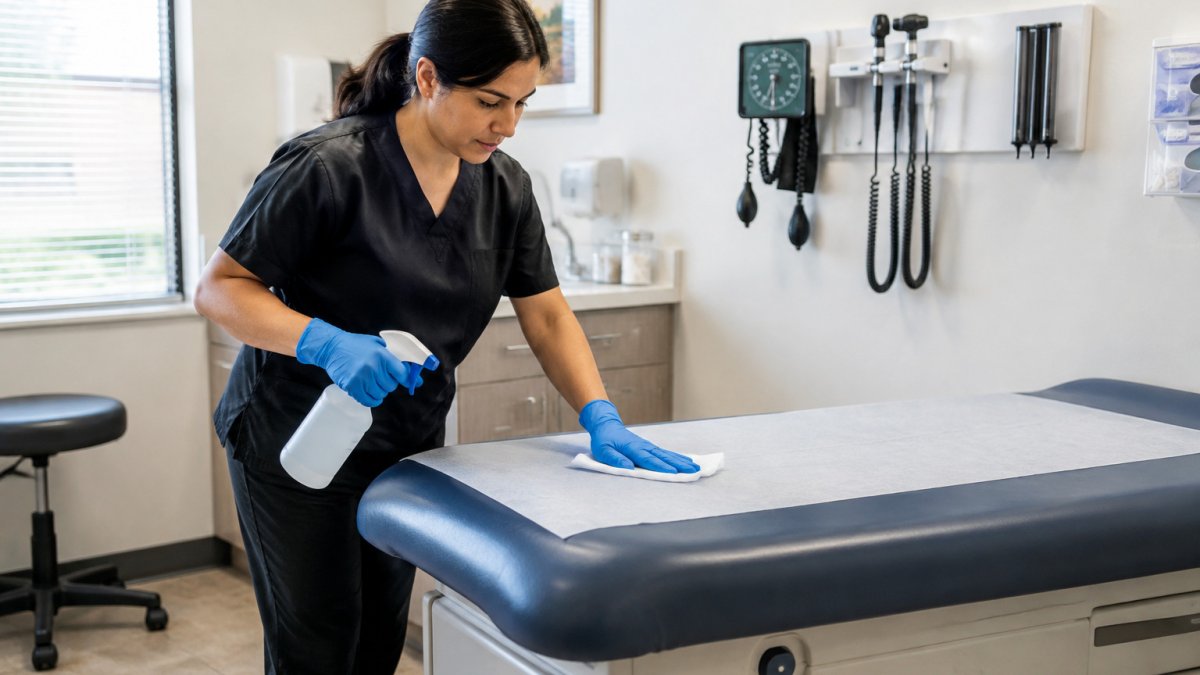
A medical office exam room cleaning checklist is a written, task-by-task guide telling staff exactly what to clean, how, and when, so every patient room meets the same standard. Follow the seven steps in order: hand hygiene, clear and dispose, clean top to bottom, disinfect high-touch surfaces, change disposable covers, scrub floors, and log the clean.
- High-touch surfaces should be disinfected between every patient, with a deeper clean at least daily.
- A disinfectant must stay wet for the full dwell time on the label or you cleaned nothing.
- Assign the between-patient wipe to clinical staff and daily and weekly work to cleaning staff.
- Medical offices fall under OSHA's bloodborne pathogens standard, requiring a written exposure control plan and PPE.
- Mixing bleach with an ammonia-based cleaner creates a toxic gas, so keep those products apart.
Table of Contents
- The Exam Room Cleaning Checklist Every Practice Needs
- Exam Room Disinfection Frequency: How Often Is Enough?
- OSHA Medical Office Cleaning Requirements and Chemical Safety
- Frequently Asked Questions
The Exam Room Cleaning Checklist Every Practice Needs
A medical office exam room cleaning checklist is a written, task-by-task guide telling staff exactly what to clean, how, and when, so every patient room meets the same standard.
- Hand hygiene first. Wash or sanitize before gloving.
- Clear and dispose. Remove trash, sharps, and used supplies.
- Clean top to bottom. Start high, finish at the floor.
- Disinfect high-touch surfaces. Table, handles, switches, keyboard.
- Change disposable covers. Table paper and pillow covers go in the trash.
- Scrub floors. Mop with fresh solution, never a dirty bucket.
- Log the clean. Initial the room sheet with time and date.
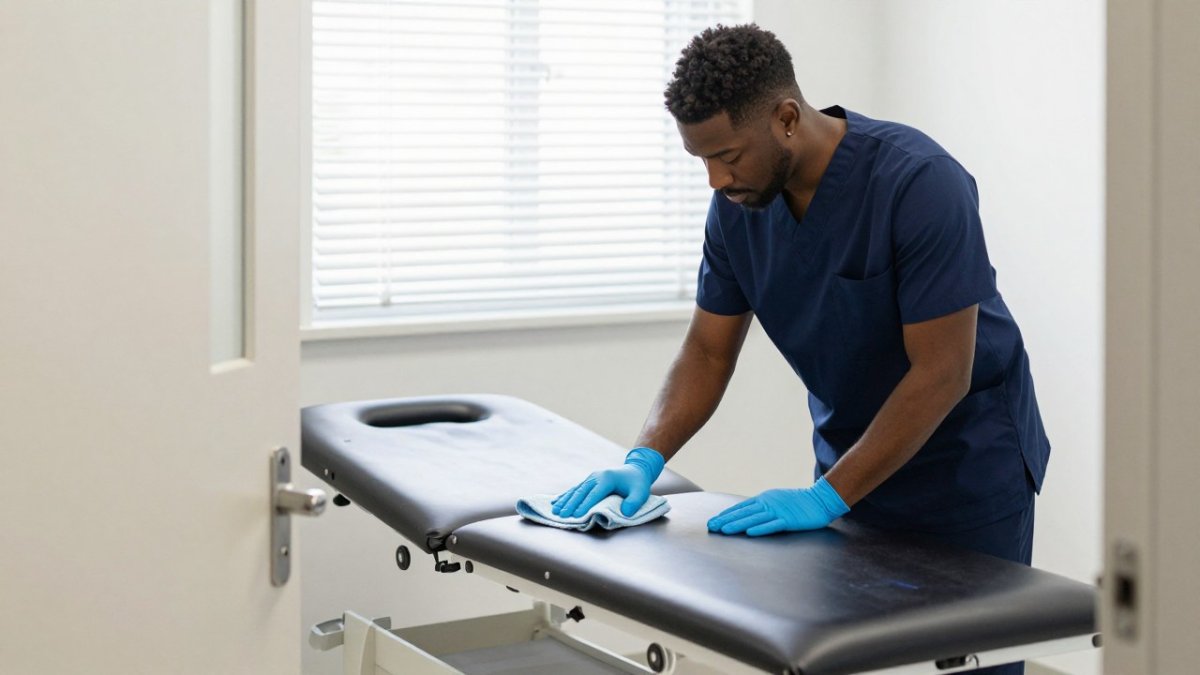
Two steps get rushed most often: surface contact time and the log. A disinfectant must stay wet for the full dwell time on the label; wipe it dry too soon and you cleaned nothing. See our guide to the 5 office cleaning tasks businesses should prioritize.
Here is the seven-step checklist in the order staff should follow it.
| Step | What to do |
|---|---|
| 1 | Wash or sanitize hands before gloving |
| 2 | Remove trash, sharps, and used supplies |
| 3 | Clean top to bottom, starting high |
| 4 | Disinfect high-touch surfaces like table and handles |
| 5 | Change table paper and pillow covers |
| 6 | Mop floors with fresh solution |
| 7 | Initial the room sheet with time and date |
Exam Room Disinfection Frequency: How Often Is Enough?
High-touch surfaces in an exam room should be disinfected between every patient, while the full room gets a deeper clean at least daily and a thorough scrub weekly and monthly.
- Between patients: exam table, door handles, light switches, countertop, chair arms
- Daily: floors, trash removal, sink and faucet, full high-touch wipe-down
- Weekly: walls near the table, vents, baseboards, cabinet fronts
- Monthly: deep scrub of floors, ceiling fixtures, and storage areas
Turnover time drives this: if a room flips in ten minutes, staff need a short list they can finish in that window. Assign the between-patient wipe to clinical staff and daily and weekly work to whoever handles your cleaning. Our office cleaning frequency and cost comparison explains how to set an overall schedule.
OSHA Medical Office Cleaning Requirements and Chemical Safety
Medical offices fall under OSHA's bloodborne pathogens standard, requiring a written exposure control plan, proper PPE, and safe handling of contaminated waste. Cleaning chemicals must carry Safety Data Sheets, and staff must know where those sheets are kept.
- PPE: gloves for all body-fluid contact, plus eye protection when splashing is possible
- Hand hygiene: wash stations stocked and accessible in every room
- Biohazard waste: red bags and sharps containers closed and removed on schedule
- Chemical labels: every spray bottle labeled, never stored unmarked
- Ventilation: rooms aired per product instructions during disinfection
Watch out: mixing bleach with an ammonia-based cleaner creates a toxic gas. Keep those products apart and train staff on it. Once compliance duties are clear, vet any contractor using our guide on how to evaluate office cleaning contractors. Browse more cleaning tips and insights for practical guidance.
Exam rooms only stay compliant when the checklist is followed every single time, not just when someone is watching. That takes a crew with a written process and a schedule you can count on. Parkside Commercial Clean provides after-hours service, a written checklist-based cleaning process, and licensed, bonded, and insured staff, so your rooms are ready before the first patient arrives. Get started with Parkside Commercial Clean and hand the disinfection work to a team that documents every visit.
Frequently Asked Questions
What is the difference between cleaning and disinfecting an exam room?
Cleaning removes visible soil, dust, and debris from surfaces using soap or detergent. Disinfecting kills pathogens on those surfaces using an EPA-registered product. You must clean before you disinfect, because soil can block the disinfectant from reaching the surface. In an exam room, both steps belong on the checklist for the table, countertops, and high-touch surfaces. Skipping the cleaning step weakens the disinfection and leaves the room less safe for the next patient.
How often should high-touch surfaces be disinfected in an exam room?
High-touch surfaces like the exam table, door handles, light switches, and countertops should be disinfected between every patient, not just at the end of the day. Exam room disinfection frequency depends on patient volume, but any surface a patient or staff member touches needs attention after each visit. Floors and less-touched areas can follow a daily or weekly schedule. Build the between-patient wipe-down into your checklist so the step never gets skipped during a busy clinic day.
Who is responsible for exam room sanitation in a medical office?
Responsibility is usually split. Clinical staff handle between-patient wipe-downs of the exam table and high-touch surfaces, while environmental services or an after-hours cleaning crew handle floors, waste removal, and deeper disinfection. The key is a written checklist that names who does what and when, so nothing falls between the two groups. A written checklist can help define which after-hours tasks a cleaning provider covers and which quick between-patient steps your staff handles.

Need a space that’s actually ready?
Start with a complimentary walkthrough. We’ll scope the work and give you a straight number.
Request a Walk-Through →