Last Updated: November 8, 2026
Quick Summary
Prioritize office cleaning tasks in this order: high-touch surfaces, restrooms, trash, breakrooms, and floors. This ranking reflects risk to employee health and the cost of getting it wrong, not how obvious the mess looks. Clean high-touch surfaces first, then disinfect them.
- Clean first, then disinfect, because soil removes the product that kills germs.
- Empty every bin daily, even the ones that look half full.
- Wipe the microwave interior weekly to prevent the smell that drives people away.
- When a shift runs short, never cut daily high-touch surfaces, restroom restocking, or trash removal.
- Track weekly completion as a rate by counting lines completed against lines scheduled.
Table of Contents
- Why Most Office Cleaning Checklists Get the Priorities Wrong
- The 5 Office Cleaning Tasks Businesses Should Prioritize, Ranked
- Building Your Office Cleaning Schedule: Daily, Weekly, Monthly
- Weekly Office Cleaning Tasks That Prevent Buildup
- Your Office Cleaning Items List: What to Keep on Hand
- Using an Office Cleaning Checklist Template in Excel
- Assigning Ownership and Measuring Cleaning Quality
- Request a Walk-Through to Build Your Priority Cleaning Plan
- Frequently Asked Questions
Why Most Office Cleaning Checklists Get the Priorities Wrong
Most office cleaning checklists fail because they treat every task as equally urgent. A forty-line list with no ranking gives a crew no way to decide what matters when time runs short. So the vacuuming gets done, and the shared keyboard does not.
That is the wrong order. Office cleaning tasks should be ranked by risk, not by how visible the dirt is. High-touch surfaces spread germs between people. Restrooms breed problems fast. Trash left overnight attracts pests. Floors and breakrooms matter too, but they rarely cause a health complaint on their own.
At Parkside Commercial Clean, we build every program around that ranking. Below, we rank the five tasks that deserve your attention first, then show you how to build a schedule, an items list, and a simple way to measure whether the work is actually getting done.
The 5 Office Cleaning Tasks Businesses Should Prioritize, Ranked
Here is the short answer: prioritize high-touch surfaces, restrooms, trash, breakrooms, and floors, in that order. This ranking reflects risk to employee health and the cost of getting it wrong, not how obvious the mess looks.
1. High-Touch Surface Cleaning and Disinfection
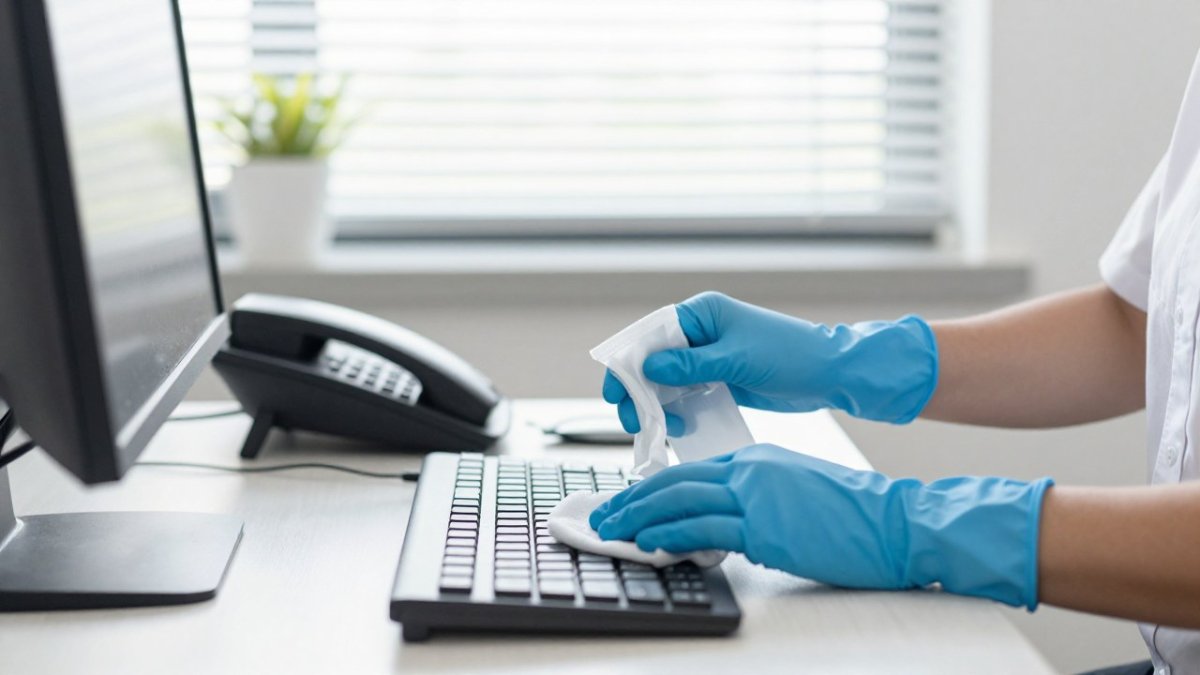
High-touch surface cleaning and disinfection is the practice of cleaning and then disinfecting the shared points people touch most: door handles, light switches, shared keyboards, phones, and elevator buttons. It ranks first because these surfaces pass germs from person to person all day.
Clean first, then disinfect. A wipe used on a dusty surface disinfects poorly. The CDC guidance on cleaning and disinfecting facilities makes the same point: soil removes the product that kills germs.
A common mistake is wiping a keyboard with a wet cloth and calling it done. Use wipes made for electronics, and let the surface dry.
2. Restroom Cleaning and Supply Restocking
Restroom cleaning and supply restocking means cleaning fixtures, floors, and touch points, then refilling soap, paper, and liners before the room runs empty. It ranks second because a restroom problem is the fastest way to generate a complaint from staff and clients.
Restocking is not a separate chore. It belongs in the same visit. A clean restroom with no paper towels still reads as a failure.
3. Trash Removal and Waste Management
Trash removal and waste management covers emptying bins, replacing liners, and getting waste out of the building daily. It ranks third because trash left overnight draws pests and odors, and those problems cost far more to fix than the emptying would have.
Empty every bin daily, even the ones that look half full. Breakroom and restroom waste should leave the building, not sit in a hallway bin.
4. Breakroom and Kitchen Cleaning
Breakroom and kitchen cleaning means wiping counters, cleaning sinks, and handling shared appliances like microwaves and coffee makers. It ranks fourth because food residue and standing water create the conditions for mold and pests.
Shared equipment is the part most guides miss. A microwave interior wiped weekly prevents the smell that makes people stop using the breakroom.
5. Floor Care and Vacuuming High-Traffic Areas
Floor care and vacuuming high-traffic areas means vacuuming entryways, hallways, and main walkways, then mopping hard floors. It ranks fifth because floors are visible but rarely urgent. Visible dirt on a floor is a presentation issue, not a health one.
Still, do not skip it. Floor edges and under furniture collect dust that ends up back in the air. Vacuum those zones weekly.
Building Your Office Cleaning Schedule: Daily, Weekly, Monthly
A workable office cleaning schedule daily, weekly, and monthly structure keeps routine work from crowding out deeper tasks. But frequency alone is not a schedule, it is a list with time labels.
Start with the ranking from the section above. The five priority tasks set the spine of the schedule.
| Frequency | Core Tasks | Risk Trigger | Owner |
|---|---|---|---|
| Daily | High-touch surfaces, trash, restrooms, breakroom counters, spot vacuuming | Germ transfer, pest attraction, supply failure within one business day | Night crew lead |
| Weekly | Floor edges, under furniture, glass partitions, microwave interior, vent dusting | Visible buildup and odor within three to five days | Day porter or contractor |
| Monthly | Deep cleaning, carpet extraction, window interiors, appliance interiors, supply audit | Slow accumulation that resists routine methods | Facilities manager |
Daily work protects health. Weekly work prevents buildup. Monthly deep cleaning resets the space. That much is standard. The part most schedules miss is the cut order.
When a shift runs short, crews improvise, and improvisation usually protects the visible task over the risky one. Write the cut order down instead.
A second mechanism that separates a real schedule from a wish list is the trigger-based add-on. Some tasks should not wait for the calendar.
Crews stop guessing, managers stop chasing, and the weekly review has something concrete to check against.
Weekly Office Cleaning Tasks That Prevent Buildup
Weekly office cleaning tasks are the ones that stop small messes from becoming deep-cleaning projects. They are not urgent on any given day, which is exactly why they get skipped.
Here are the weekly tasks that matter most, each paired with the inspection criterion a supervisor or facilities lead can use to confirm it was actually done:
- Vacuum floor edges and under furniture. Pass if a white cloth run along the baseboard and under one desk returns no visible grit. Fail if the cloth picks up debris the weekly vacuum should have caught.
- Wipe glass partitions and entry doors. Pass if the glass is free of smudges at hand height and the door push plate is clean on both sides. Fail if fingerprints remain at the primary contact zone.
- Dust vents and high shelves. Pass if the vent louvers show no visible dust mat and the shelf edge above eye level is clear. Fail if dust falls when the vent is tapped.
- Clean microwave and coffee maker interiors. Pass if the microwave interior has no food residue or odor and the coffee maker reservoir is free of mineral film. Fail if either appliance smells stale when opened.
- Wipe shared equipment and cabinet fronts. Pass if shared printers, copier touchscreens, and cabinet pulls are free of visible film. Fail if a finger drag leaves a mark.
- Spot-clean carpet stains before they set. Pass if no stain is visible from standing height after treatment. Fail if the stain has wicked back after drying.
That pass/fail structure is the piece most weekly checklists leave out. A bullet list tells a crew what to do. A criterion tells a manager whether it happened, and it gives the crew a clear standard to hit rather than a vague instruction to "clean."
Track weekly completion as a rate, not a yes/no. Count the lines completed against the lines scheduled, and review the rate at the end of each week.
If your crew only has time for the daily list, buildup wins. Weekly tasks are the maintenance layer that keeps deep cleaning from becoming constant, but only when each task carries a standard and a completion record.
Your Office Cleaning Items List: What to Keep on Hand
An office cleaning items list should cover products, tools, and supplies in one place so nothing runs out mid-visit. Keep it stocked in a locked closet, and check it weekly.
- Disinfectant wipes and sprays rated for the surfaces you clean
- Microfiber cloths in two colors, one for restrooms and one for everything else
- Mops, buckets, and a floor-care product matched to your flooring
- Vacuum with edge and crevice tools
- Trash liners in the right sizes
- Restroom supplies: soap, paper towels, toilet paper, liners
- Glass cleaner and lint-free cloths
- Gloves and safety gear
Color-coding cloths is a small habit with a big payoff. It stops restroom germs from traveling to a breakroom counter.
Using an Office Cleaning Checklist Template in Excel
An office cleaning checklist template in Excel works because it is editable, shareable, and free. Build one sheet per frequency, with columns for task, area, owner, and date completed.
Set it up like this:
- Sheet 1: Daily tasks
- Sheet 2: Weekly tasks
- Sheet 3: Monthly tasks
- Columns: Task, Area, Assigned To, Date, Initials
Add a dropdown for status: Done, Missed, or Not Needed. Then filter by Missed at the end of each week. That filter is your quality report.
The OSHA guidance on workplace safety and health is worth reading alongside your checklist. A clean workplace supports safer working conditions, and the checklist is how you prove the work happened.
Assigning Ownership and Measuring Cleaning Quality
Ownership and measurement are the two things most offices skip, and they are the two that decide whether a checklist actually works. Assign every task to a named person or crew, and check results against a simple standard.
For ownership:
- Name one person accountable for each area
- Put that name on the checklist
- Review missed tasks weekly, not monthly
For quality, use a simple three-point check on a sample of areas:
- Touch test: Is the surface free of grit and residue?
- Sight test: Are edges, corners, and under-furniture zones clean?
- Supply test: Are restrooms and breakrooms fully stocked?
Request a Walk-Through to Build Your Priority Cleaning Plan
The gap between a checklist and a clean office is accountability. Someone has to own the ranking, the schedule, and the follow-up. That is the part we handle.
Parkside Commercial Clean builds customized cleaning programs for offices, law firms, financial offices, and medical facilities. We work after hours so your team walks into a clean space, and we follow a written checklist so results stay consistent. We are licensed, bonded, and insured.
If you want to see how the priorities above would map to your space, read our cleaning tips and insights or request a walk-through. We will rank your tasks, build the schedule, and put a plan in writing.
Get started with Parkside Commercial Clean and walk into a workplace you are proud to show clients.
Most offices do not need more cleaning. They need the right five tasks done first, every time. That starts with a walk-through, a written plan, and a crew that owns the result.
Frequently Asked Questions
What are the most important office cleaning tasks to do every day?
The daily non-negotiables are high-touch surface disinfection, restroom cleaning and restocking, trash removal, breakroom wipe-downs, and spot vacuuming or mopping of entryways. These five office cleaning tasks cover the areas where germs spread fastest and where clients form their first impression. Daily attention to these zones prevents the kind of buildup that turns a quick wipe into a deep-clean project.
How often should an office be professionally cleaned?
Most professional offices need recurring service two to five nights per week, depending on headcount and foot traffic. A four-person dental practice may only need twice-weekly visits, while a law firm with daily client meetings usually needs nightly service. Build your office cleaning schedule daily, weekly, monthly around occupancy and client-facing hours, then adjust after a month of tracking results.
What should be included in a basic office cleaning checklist?
A solid office cleaning checklist template in Excel should list high-touch surfaces, restroom fixtures and supplies, trash and recycling, breakroom appliances and sinks, floor care, and dusting of vents and glass partitions. Add columns for frequency, assigned owner, and a pass/fail quality mark so you can spot missed tasks. Review the checklist monthly and update it as your office layout or traffic patterns change.
What is the 5 5 5 rule for cleaning?
The 5 5 5 rule is a simple habit framework: spend five minutes tidying, five minutes wiping surfaces, and five minutes on floors or trash each day. It works well for employee self-maintenance between professional visits. It does not replace a real office cleaning items list or scheduled deep cleaning, but it keeps desks and shared spaces from degrading between service nights.

Need a space that’s actually ready?
Start with a complimentary walkthrough. We’ll scope the work and give you a straight number.
Request a Walk-Through →